
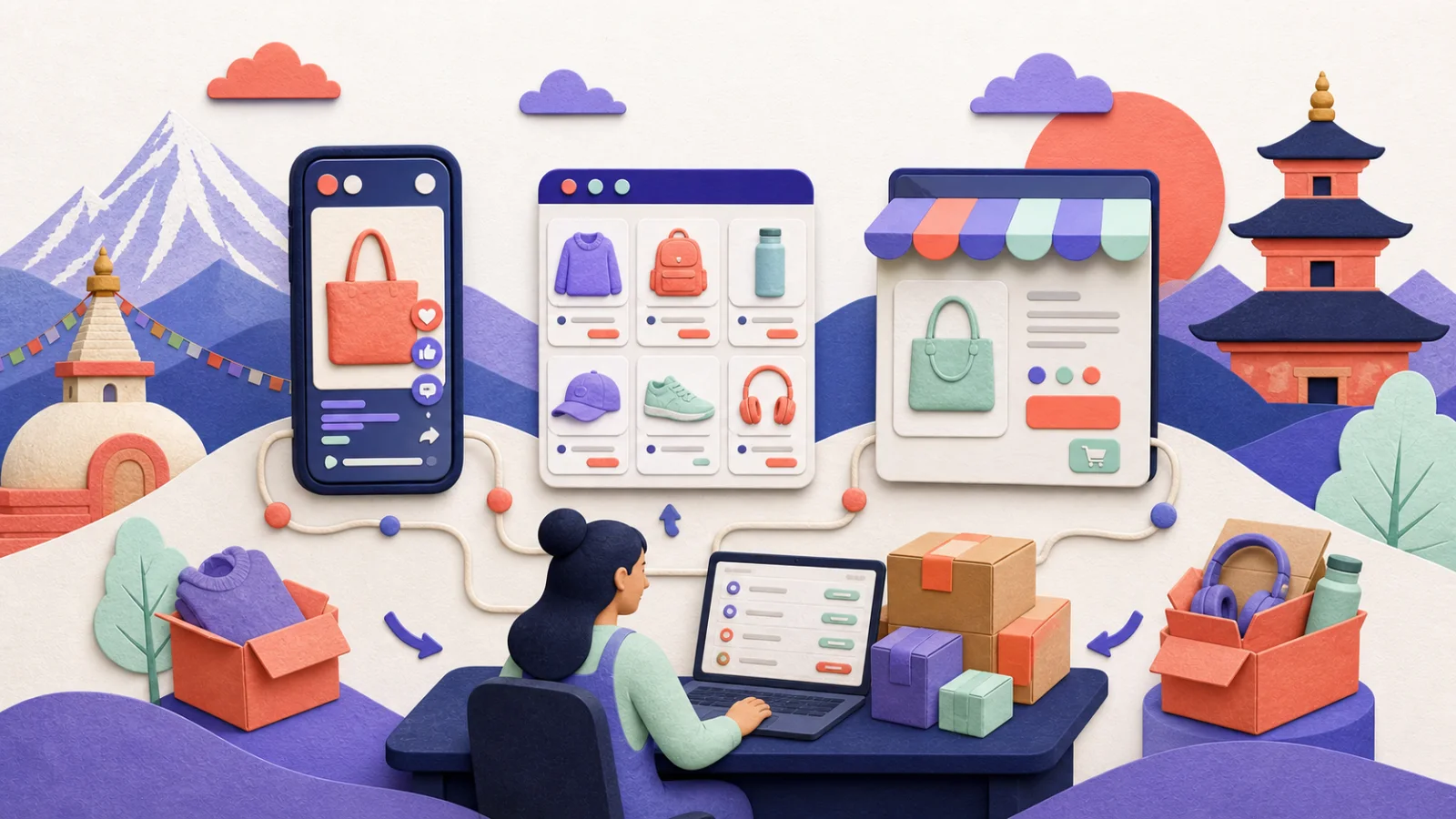
How to sell online in Nepal: every option compared (Daraz, Instagram, your own store)
An honest comparison of social selling, online marketplaces, and your own brand store in Nepal. Find the right setup for your business.
The Pasalos Team
July 13, 2026 · Updated August 3, 2026 · 3 min read
If you ask ten shop owners in Kathmandu how they sell online, you will get ten different answers. Some live entirely in Instagram Direct Messages (DMs), some list hundreds of items on Daraz, and others run their own website.
There is no single "best" sales channel for every Nepali business. Daily order volume, technical comfort, and control over customer records determine which option fits.
1. Social selling: Instagram DMs, TikTok, and Facebook
This is the default starting point for most Nepali businesses. You post a photo or a video, write "DM for price," and handle the entire sale through chat.
Where it works
Creating an Instagram business profile or TikTok account costs nothing. Short videos and posts can introduce a product to people who have never heard of the shop, and chat gives cautious buyers a direct way to ask questions.
Where it becomes difficult
Every order depends on a reply. The seller has to send the price, collect an address, share a payment number, check the screenshot, and copy the details somewhere else. A busy inbox can hide an order, and a buyer may leave while waiting for the price. Showing prices publicly and linking to checkout removes several of those steps.
2. Marketplaces: Daraz
Selling on an established marketplace means listing products inside a site that already has shoppers.
What the marketplace provides
Daraz provides product search, a familiar checkout, delivery operations, returns, and cash-on-delivery collection. Buyers also have a defined process for disputes. That can help a new seller reach customers before the seller has built an audience of its own.
Costs and limits
The marketplace charges fees on sales, with rates that vary by category and service. Similar products appear together, so price and ratings strongly influence the order. The marketplace also controls the customer account and communication rules. Late dispatches or inaccurate stock can affect a seller's rating or account status, so read the current seller terms before listing.
3. Your own brand store (e.g., Pasalos, Shopify)
Running your own store means building a website at your own domain where you control the entire storefront, checkout, and inventory.
What you control
The seller controls the domain, product pages, checkout, and customer records. A connected payment gateway can confirm wallet payments against an order, while delivery zones can calculate shipping before purchase. Platform subscriptions and payment-gateway charges still apply, but a store builder may not take a marketplace commission on each sale. Check the current plan and gateway terms before comparing costs.
What remains the seller's job
A new website has no audience by default. Social posts, search results, referrals, or advertising have to bring people to it. There is also a platform or hosting bill, and the catalog, payment account, and delivery rates need to be configured before launch.
The comparison at a glance
| Feature | Social Selling (IG/TikTok) | Marketplace (Daraz) | Your Own Store (Pasalos/Shopify) |
|---|---|---|---|
| Startup cost | रु 0 | रु 0 | Monthly subscription |
| Commissions | रु 0 | High (varies by category) | रु 0 (only gateway processing) |
| Setup Time | Minutes | Days (approval process) | Under an hour |
| Order handling | Manual | Managed in marketplace tools | Managed in store dashboard |
| Customer records | In the social account | Controlled by marketplace | Controlled by store |
| Traffic source | Social discovery | Marketplace search | Seller's own channels |
A practical way to combine channels
The channels can do different jobs:
- Use TikTok, Instagram, or Facebook to show the product and answer questions.
- Put the store link in each profile so people can see the price, choose delivery, and place the order without waiting for a reply.
Social media can introduce shoppers to your products while your own store handles prices, payment, and delivery details. You spend less time copying order details from chat and keep a direct record of each sale.
Ready to set up the store side? Our step-by-step guide to starting an online business in Nepal walks through registration, payments, and delivery, and our platform comparison covers which store builder fits your budget.